Where I Was on September 11, 2001

This reflection was inspired by a remembrance shared by Dr. Ana Navas-Acien connecting personal memory with the continuing public-health consequences of September 11.
We can all remember where we were on September 11, 2001.
I was in my final semester as an undergraduate at Southeastern Louisiana University, sitting in an Organic Chemistry II laboratory. It was also the semester immediately after I completed my four years of eligibility as a student-athlete on the university's baseball team. One chapter of my life had ended, and I was beginning to determine what would come next.
Then came the news.
Everyone in the laboratory was stunned. After class, I returned to our apartment, where my roommates and I tried to comprehend what we were seeing. Like millions of people, we experienced disbelief, profound sadness, and anger. It was a day that changed how we understood the world.
The September 11 attacks claimed 2,977 lives at the World Trade Center, the Pentagon, and near Shanksville, Pennsylvania. Yet the consequences did not end that day. Responders, survivors, workers, residents, and others exposed to the disaster have continued to experience physical and mental health effects over the decades that followed.
Twenty-five years later, I remember those who were killed, the families who carried unimaginable grief, and the first responders who moved toward danger to help others. I also honor the scientists, clinicians, public-health professionals, and participating communities whose sustained work has helped reveal the disaster's chronic and evolving health consequences.
That scientific work reminds us that the consequences of a disaster may emerge across multiple organ systems and unfold over years or even decades. Long-term surveillance and research have documented respiratory disease, cancer, post-traumatic stress disorder, cardiovascular outcomes, pregnancy-related effects, and other consequences among affected populations. The World Trade Center Health Program now demonstrates how connecting research, clinical care, and longitudinal monitoring can improve outcomes while preparing society to respond more effectively to future disasters.
Researchers at the Columbia University Mailman School of Public Health have also reflected on how environmental measurements and long-term cohort studies made it possible to examine the effects of World Trade Center dust, chemical exposures, and psychological trauma. Their work underscores a principle that continues to guide environmental and public-health science: what we fail to measure, we may never fully understand.
On September 11, 2001, I was an undergraduate student trying to determine what would come next after baseball. I could not have imagined the scientific, teaching, and mentoring journey ahead—or how deeply that morning would continue to shape our generation.
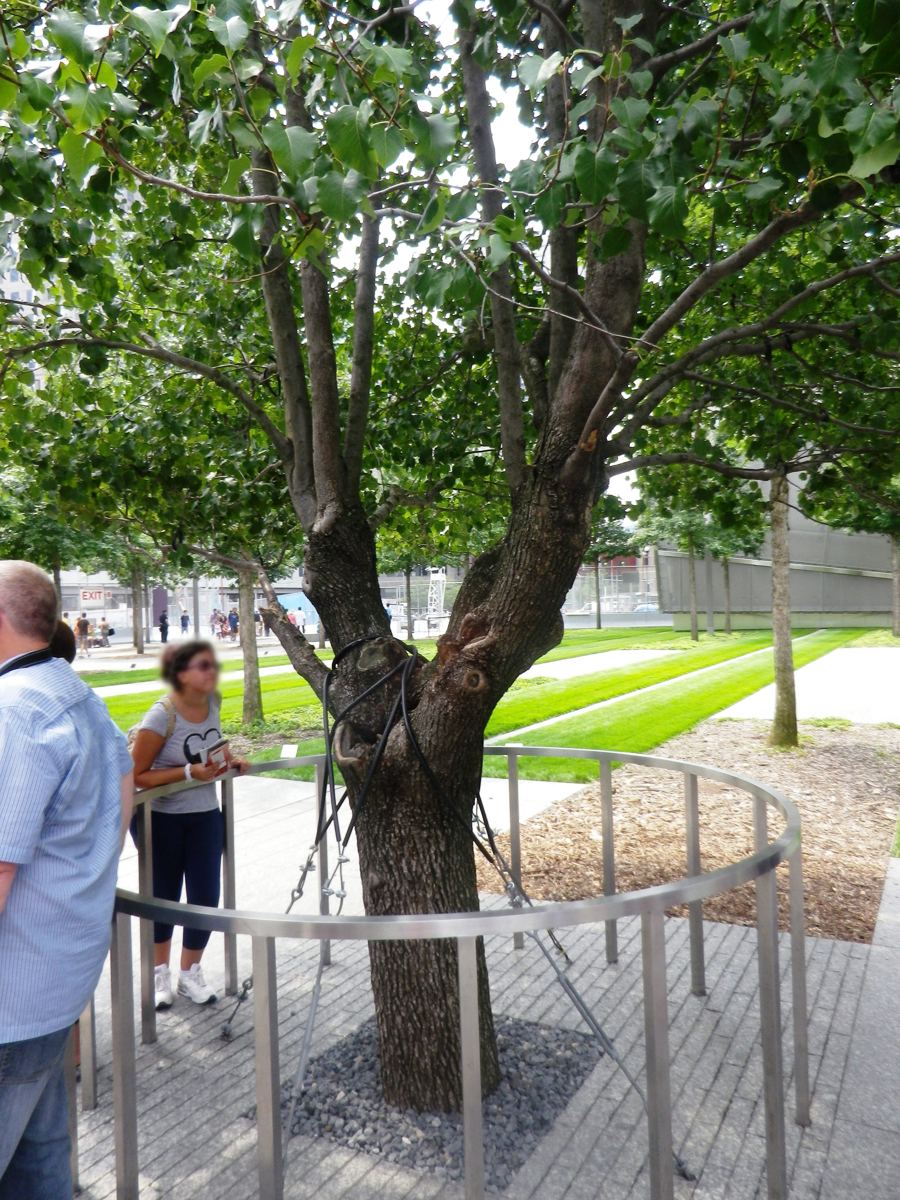
Today, the Survivor Tree stands at the National September 11 Memorial as a living symbol of resilience, survival, and renewal. Its meaning extends beyond remembrance: even after profound loss, healing and growth remain possible.
We remember those we lost. We honor those who responded. We recognize those who continue to live with the consequences. And we remain committed to building a world guided by knowledge, compassion, preparedness, and our shared humanity.
References and Further Reading
Azofeifa, A., Calvert, G. M., Anderson, K. R., & Howard, J. (2026). Twenty-five years after 9/11—Lessons from the World Trade Center Health Program. JAMA. https://doi.org/10.1001/jama.2026.15259
Columbia University Mailman School of Public Health. (2026, September 8). Researchers reflect on long-term health impacts of 9/11.
Daniels, R. D., Kubale, T. L., Reissman, D. B., & Howard, J. (2021). The World Trade Center Health Program: Twenty years of health effects research. American Journal of Industrial Medicine, 64(10), 797–802. https://doi.org/10.1002/ajim.23273
National September 11 Memorial & Museum. (n.d.). The Survivor Tree.
National September 11 Memorial & Museum. (n.d.). September 11, 2001 commemoration.