Our Research Group Manual Has a New Home: manual.riplrt.com
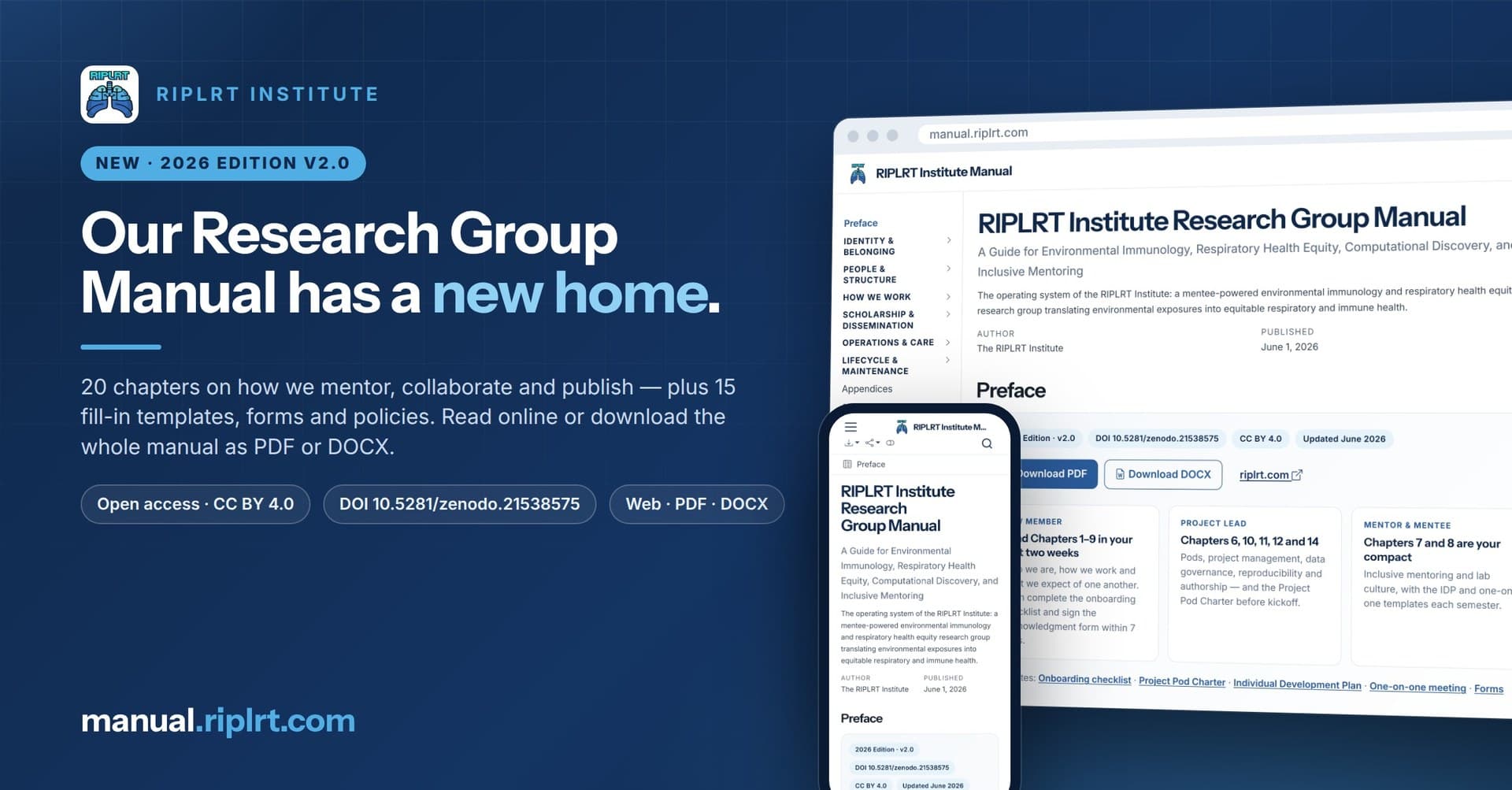
The RIPLRT Institute Research Group Manual has moved to its own home at manual.riplrt.com.
The manual is how the RIPLRT Institute runs day to day. We are a mentee-powered research group in environmental immunology and respiratory health equity, and the manual sets out how we mentor, collaborate, handle data, use AI responsibly, and give credit. The 2026 Edition (v2.0) has 20 chapters in six parts—Identity & Belonging, People & Structure, How We Work, Scholarship & Dissemination, Operations & Care, and Lifecycle & Maintenance—plus appendices with templates, policies, and forms.
What’s new
- A faster, mobile-friendly site in RIPLRT colors, with light and dark mode and search across the whole manual. The old GitHub Pages address has been retired.
- Quick starts by role. New members begin with Chapters 1–9 in their first two weeks. Project leads go to Chapters 6, 10, 11, 12, and 14. Mentors and mentees share Chapters 7 and 8 as their mentoring compact.
- 15 fill-in templates and 3 forms, each a branded PDF you can download from the appendices—including the new-member onboarding checklist, Project Pod Charter, Individual Development Plan, and one-on-one meeting template. The appendices also carry the Institute’s policies on authorship and contributorship, data governance, responsible AI use, and conduct.
- Open access under CC BY 4.0 and citable through its DOI, 10.5281/zenodo.21538575.
Why I wrote it down
Much of what makes a research group work is never written anywhere: how a first-year student knows what is expected in week two, how co-authorship gets decided before a manuscript exists, what a mentor and mentee owe one another each semester. I wrote the manual for our students and early-career scientists so that none of this depends on being in the room when it was last discussed.
The chapters on inclusive mentoring, psychological safety, reproducible and open science, and authorship are also meant to be reused. If you lead a research group, borrow what helps and tell me what you would change.
Read the manual at manual.riplrt.com →
The announcement is also posted on the RIPLRT Institute site: riplrt.com/news/research-group-manual-new-home.